
The Two-Finger Rule: How to Properly Fit Your Child’s Helmet
We all know the feeling. The weekend rolls around, the sun is shining, and your kids are absolutely desperate to get to the local park to ride their bikes, scooters, or skateboards. It is fantastic to see them active and outdoors, building their confidence on two wheels. But before they push off the driveway, there is one crucial safety check every parent needs to perform.
We are talking about their bicycle helmet.
Now, you might be thinking, “I bought a good helmet, and they are wearing it, so we are good to go, right?” Not exactly. A helmet only works if it is fitted correctly. A loose, wobbly, or tilted helmet is incredibly dangerous and can leave your child’s head exposed right when they need protection the most.
Today, we are going to walk you through the gold standard of safety: The Two-Finger Rule. It is a foolproof, quick, and easy method to ensure your kid’s gear is locked in, secure, and ready for action.
Why a Properly Fitted Bicycle Helmet is Non-Negotiable
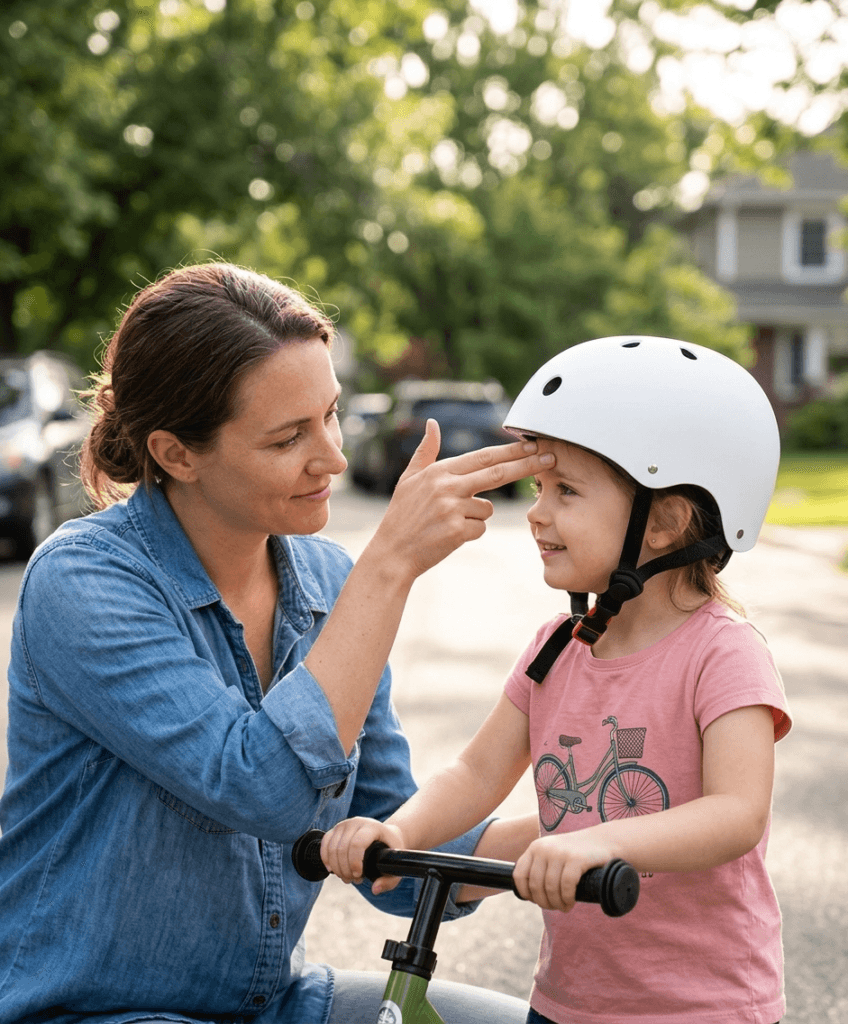
Let us talk facts for a second. In Australia, wearing an approved helmet is the law. But beyond avoiding a fine, the physics of a bicycle crash are no joke. Kids are still learning balance and coordination, which means tumbles are just a normal part of the process.
A high-quality bicycle helmet is engineered with a hard outer shell and a crushable foam core. During an impact, that foam is designed to compress and absorb the violent energy of the crash, keeping the skull and brain safe. However, if the helmet shifts backward during a fall, the forehead is entirely exposed. If it is too loose, it can fly off before they even hit the ground. Proper fit is literally the difference between dusting off scraped knees and a trip to the emergency room.
The Golden Standard: The Two-Finger Rule Explained
You do not need to be a professional bike mechanic to get this right. You just need your fingers and a couple of minutes before you leave the house. Here is the step-by-step breakdown of the two-finger rule.
Step 1: The Eyebrow Check (Two Fingers Above)
Place the helmet flat on your child’s head. It should never be tilted back like a sun hat or resting on the back of their skull. Take your index and middle fingers and place them together horizontally just above your child’s eyebrows. The bottom rim of the bicycle helmet should touch the top of your fingers. This ensures their forehead is fully protected if they take a forward spill over the handlebars.
Step 2: The “V” Shape Strap Check
Next, look at the side straps. These straps should sit smoothly on the sides of the face and meet to form a perfect “V” shape right beneath and slightly in front of the ears. If the straps are twisted or the plastic slider is sitting down by their jaw, you need to adjust them. The “V” keeps the helmet from rocking forward or backward.
Step 3: The Chin Strap Check (Two Fingers Below)
Finally, buckle the chin strap. You should hear a clear click. Now, try to slide your index and middle fingers between the strap and your child’s chin.
- If you can fit more than two fingers, or your whole hand, the strap is way too loose.
- If you cannot fit even one finger, it is too tight and will pinch them. Two fingers is the sweet spot. It allows them to open their mouth to talk and breathe heavily while riding, but keeps the helmet firmly locked down.
Common Helmet Fitting Mistakes Parents Make
Even with the best intentions, we see a few common mistakes at the local skate bowl. Avoid these pitfalls:
- Buying for “Room to Grow”: A bicycle helmet is not a pair of sneakers. You cannot buy a size up hoping they will grow into it. It needs to fit perfectly right now. Use the adjustable dial at the back of modern helmets to fine-tune the fit.
- The “Pony-Tail” Problem: Tying your child’s hair in a high ponytail or bun can force the helmet to sit too high or tilt forward. Opt for low ponytails or braids that sit below the helmet’s retention system.
- Ignoring Wear and Tear: Helmets expire. The foam degrades over time due to UV exposure and sweat. If the helmet has been in a severe crash, or if it is over 5 years old, throw it in the bin immediately.
Finding a Helmet Kids Actually Want to Wear
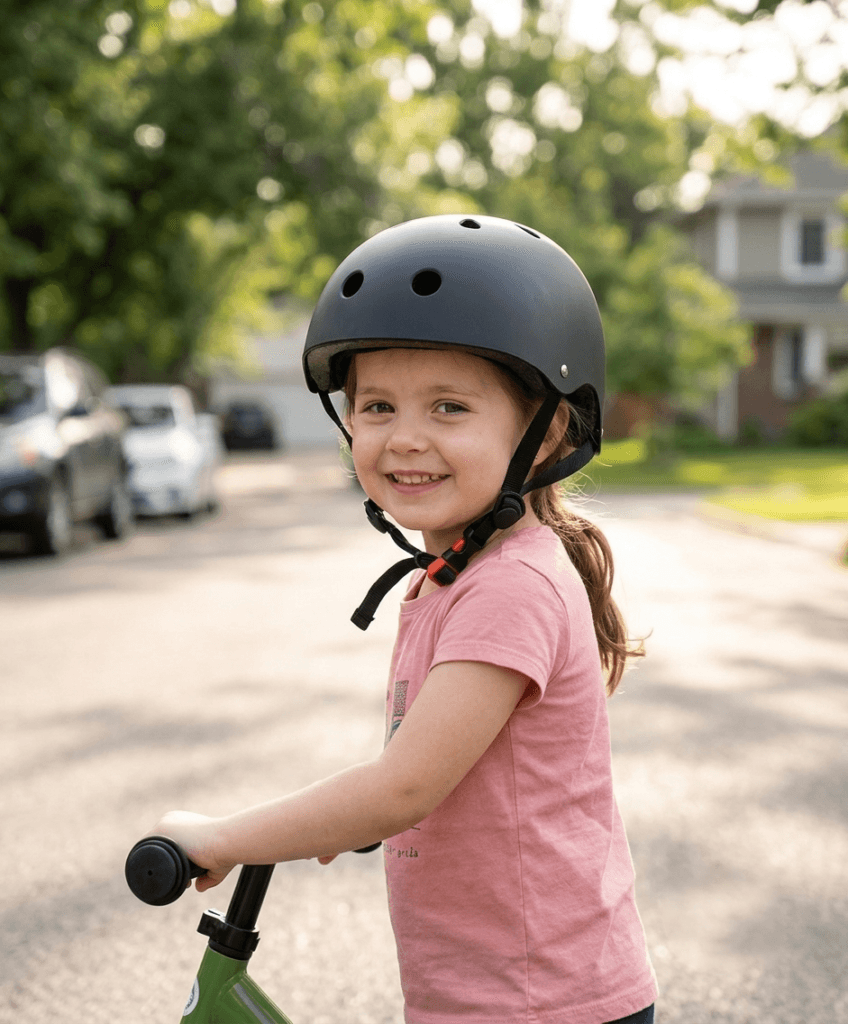
Let’s be completely honest. The biggest hurdle to safety is a stubborn child who thinks their helmet looks “dorky.” If it is heavy, ugly, or uncomfortable, you are going to fight a daily battle to keep it on their head.
The secret is finding a design that looks cool, closely mimicking the gear the pro skaters and BMX riders wear, without sacrificing top-tier safety. We highly recommend checking out the Kirli Skateboard Helmet. Do not let the name fool you, this sleek, matte-finish gear is fully certified for cycling and provides incredible coverage for the back of the head. It features a dial-fit system to make that “two-finger rule” adjustment an absolute breeze, ensuring your kid looks stylish while staying 100% protected on the streets.
Q&A: Your Top Helmet Safety Questions Answered
We get a lot of questions from parents trying to navigate the world of kids’ cycling gear. Here are some of the most common ones we hear:
Q: Are skateboard helmets safe to use as a bicycle helmet?
A: Yes, absolutely! As long as the helmet carries the Australian Standard sticker (AS/NZS 2063), it is perfectly legal and safe for cycling. In fact, many parents prefer the “skater” style because it offers more protection for the lower back of the head compared to traditional, pointy road-bike helmets.
Q: My toddler is only riding a tricycle in the driveway. Do they really need a helmet?
A: Yes! It is never too early to build good habits. By making the helmet a non-negotiable rule from day one, you will avoid massive arguments later when they transition to a balance bike or a bigger two-wheeler.
Q: How do I clean a smelly helmet?
A: Kids sweat, and helmets can get pretty gross. Do not use harsh chemicals. Simply remove the inner foam pads and hand wash them in the sink with mild dish soap and warm water. Let them air dry completely before sticking them back in.
The Final Check
Before you head out this weekend, grab your kid’s bicycle helmet and give it the two-finger test. It takes less than sixty seconds, but it provides complete peace of mind. Remember, the best helmet in the world is the one that is fitted properly and worn every single time they ride.
Stay safe, ride hard, and enjoy the weekend trails!