
Jun
The Parent’s Guide to Bicycle Helmet Safety for Kids: Keeping Your Little Riders Protected
We’ve all seen the scene: the sun is shining, the local park is calling, and your kids are eager to hop on their bikes, scooters, or skateboards. It is one of the joys of parenting—watching them gain confidence, balance, and freedom on two (or four!) wheels. But as any parent knows, that sense of freedom comes with a healthy dose of parental anxiety.
The most important tool in your safety arsenal? A properly fitted helmet.
While we all know they should wear one, bicycle helmet safety for kids is about much more than just clicking a buckle. It’s about ensuring that if they do take a tumble, their head is protected by gear that actually works. Whether you are navigating the school run or hitting the local skate bowl, here is everything you need to know to keep your little legends safe.
Why the Right Helmet Matters More Than You Think
In Australia, the laws are clear: if you are on a bicycle, you must be wearing an approved helmet. But beyond the legal requirements, the physics of a fall are real. Kids are still developing their coordination, and “learning” often involves a few spills.
A high-quality helmet is designed to absorb the energy of an impact, protecting the skull and brain from traumatic injury. Not all helmets are created equal, though. A helmet that is too big, too loose, or improperly secured can shift during a fall, leaving the forehead or back of the head exposed exactly when it needs protection most.
The “Two-Finger” Golden Rule of Fitting
If you’ve ever felt like you’re battling a crocodile to get a helmet on your child’s head, you aren’t alone. However, proper fit is non-negotiable. Follow these simple steps to ensure maximum bicycle helmet safety for kids:
1. The Level Test
The helmet should sit flat on the head, not tilted back like a sun hat. It should cover the forehead, sitting about two finger-widths above the eyebrows. If it’s pushed too far back, the forehead is vulnerable.
2. The V-Shape Strap
The side straps should meet just under the ears, forming a clean “V” shape. Make sure there is no excess slack in the straps that allows the helmet to wiggle around.
3. The Chin Check
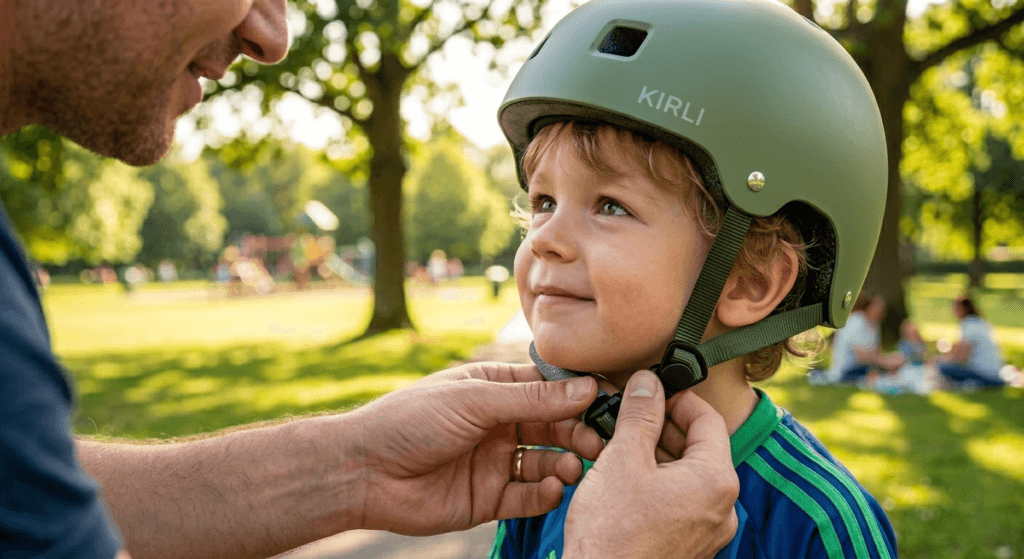
Once the buckle is snapped, you should only be able to fit one or two fingers between the strap and the chin. If you can fit your whole hand in there, it’s far too loose and won’t stay in place during a tumble.
4. The Shake Test
Ask your child to open their mouth wide and then shake their head from side to side. The helmet should stay snug against the head. If it slides around, tighten that rear adjustment dial!
Finding a Helmet They’ll Actually Want to Wear
The biggest enemy of bicycle helmet safety for kids is the refusal to wear one. If your child thinks their helmet is “dorky” or uncomfortable, they will find any excuse to take it off the moment you aren’t looking.
Modern gear has evolved. The Kirli Skateboard Helmet features a sleek, matte-finish aesthetic that looks more like professional sporting gear than old-school plastic shells. By choosing a style that feels “cool” and grown-up, you’re much more likely to have a child who puts their safety gear on without a fight.
When to Retire the Gear
Helmets aren’t meant to last a lifetime. In fact, you should be checking them regularly for signs of wear and tear. Here is when it is time to upgrade:
- After a Significant Impact: If your child has a hard fall and the helmet takes a hit, it has done its job—it has absorbed energy by compressing the internal foam. Even if there are no visible cracks, the structure is compromised. Replace it immediately.
- Sun and Heat Damage: We live in Australia! Constant exposure to harsh UV rays can degrade the outer shell and the plastic buckles over time.
- The “Outgrown” Factor: Check the fit every few months. Kids grow fast, and a helmet that fit perfectly at the start of the summer might be too tight by the time school starts again.
Encouraging Good Habits Early
Safety is a culture. When you head out for a family ride, wear your own helmet every single time. Kids are observant; if they see you prioritizing your safety, they will naturally follow suit.
Make it a part of the pre-ride routine—just like putting on shoes, checking the tires, and grabbing a water bottle. Before they even touch the pedals, the helmet goes on. By turning it into a non-negotiable habit, you are setting them up for a lifetime of safe, active fun.
Choosing Quality You Can Trust
At the end of the day, you want to know that the gear you are buying meets strict safety standards. Look for the Australian Standards mark (AS/NZS 2063:2008) on any gear you purchase. Investing in a high-quality Kirli Skateboard Helmet provides the peace of mind that you’ve chosen gear designed for durability, comfort, and, most importantly, protection.
Ride safe, have fun, and keep those helmets on!